
Cindy

Sales Manager

Oct.01,2026
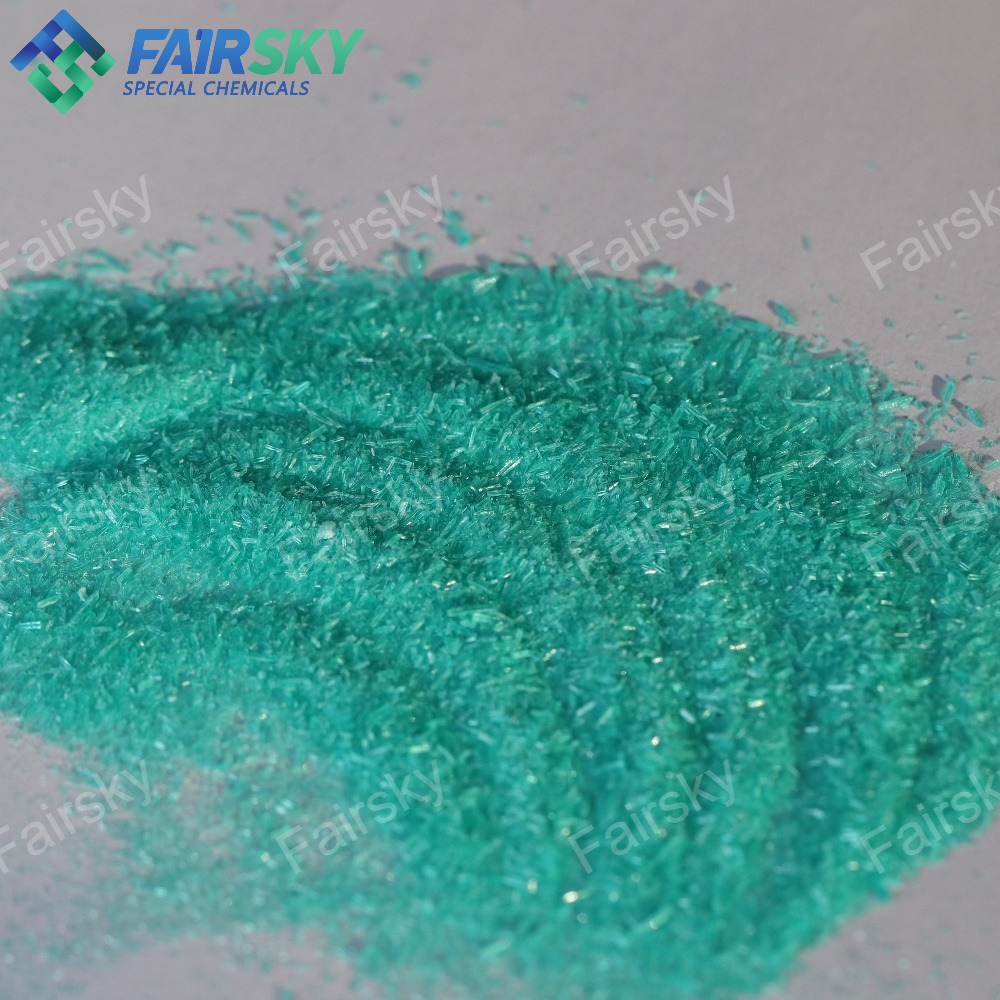
Nickel Acetate is a core functional nickel salt for eco-friendly electroplating processes, with specific technical advantages in precision electroplating and special surface treatment scenarios. It serves as a critical auxiliary raw material in the high-end electroplating sector, particularly where coating smoothness, plating bath stability, adhesion, and environmental performance are important.
In practical electroplating applications, the performance of Nickel Acetate is not limited to providing nickel ions. When compounded with traditional nickel sulfate and nickel chloride, it can influence coating grain size, surface roughness, plating bath pH, coating adhesion, and wastewater characteristics. Understanding these functions helps manufacturers select suitable nickel salts for different electroplating processes.
Nickel Acetate is a functional nickel salt used in electroplating and special surface treatment processes. Its acetate ions provide a buffering effect in the plating bath, while the nickel ions participate in the formation of the nickel coating.
Compared with traditional nickel salt systems, Nickel Acetate can be used as an auxiliary component together with nickel sulfate and nickel chloride to improve specific coating and processing characteristics. Its application is particularly relevant to precision electroplating, electronic components, automotive components, special alloys, and decorative hardware.
For more information about the properties, applications, specifications, and supply of Nickel Acetate, please read:
Nickel Acetate: Uses, Applications, and Supply from China
Nickel Acetate contributes to several important characteristics of electroplating processes, including coating grain refinement, plating bath pH stability, coating adhesion, and environmental performance.
Nickel Acetate is particularly suitable for electroplating applications where coating uniformity, surface quality, adhesion, and process stability are important. Its application extends from automotive components and precision electronic components to special alloy treatment and decorative hardware.
When Nickel Acetate is used in electroplating, its function needs to be considered together with the overall plating system. In combination with traditional nickel sulfate and nickel chloride, it can help refine coating grains, reduce surface roughness, and improve coating appearance. Its acetate ions also provide a buffering effect that supports plating bath pH stability.
For precision electroplating and special surface treatment, coating adhesion and internal stress are also important considerations. Nickel Acetate can improve the co-deposition capacity of nickel ions with other metal ions and increase coating adhesion on substrates such as steel and aluminum. Its environmental characteristics further support applications where clean production and wastewater treatment are important.
For electroplating manufacturers, selecting Nickel Acetate involves considering not only its function as a nickel salt but also how effectively it fits the specific plating process and coating requirements. Applications involving precision electronic components, automotive parts, special alloys, and decorative hardware may have different requirements for coating smoothness, adhesion, pH stability, corrosion resistance, and environmental performance.
A suitable Nickel Acetate product can therefore be selected according to the customer's specific electroplating process and application requirements.
FAIRSKY supplies nickel chemical products for industrial applications and provides Nickel Acetate for electroplating and special surface treatment applications. Understanding that different electroplating processes place different requirements on coating smoothness, bath stability, adhesion, and environmental performance, FAIRSKY focuses on supplying nickel chemical materials suitable for specific industrial applications.
For customers using Nickel Acetate in precision electroplating, automotive component plating, electronic component plating, special alloy treatment, or decorative hardware plating, FAIRSKY can provide relevant product information and technical communication according to the intended application and process requirements.
Nickel Acetate plays an important role in precision electroplating and special surface treatment by influencing coating grain size, surface smoothness, plating bath pH stability, coating adhesion, and environmental performance. Its combination with traditional nickel sulfate and nickel chloride makes it suitable for a range of industrial electroplating processes.
From automotive components and precision electronic components to special alloys and decorative hardware, Nickel Acetate can be selected according to the specific requirements of the coating and production process. Understanding these requirements helps manufacturers make better use of Nickel Acetate in electroplating applications and achieve more consistent coating performance.
Related Products
 中文
中文  Español
  العربية
  Русский
  Português
  한국어
한국어 

